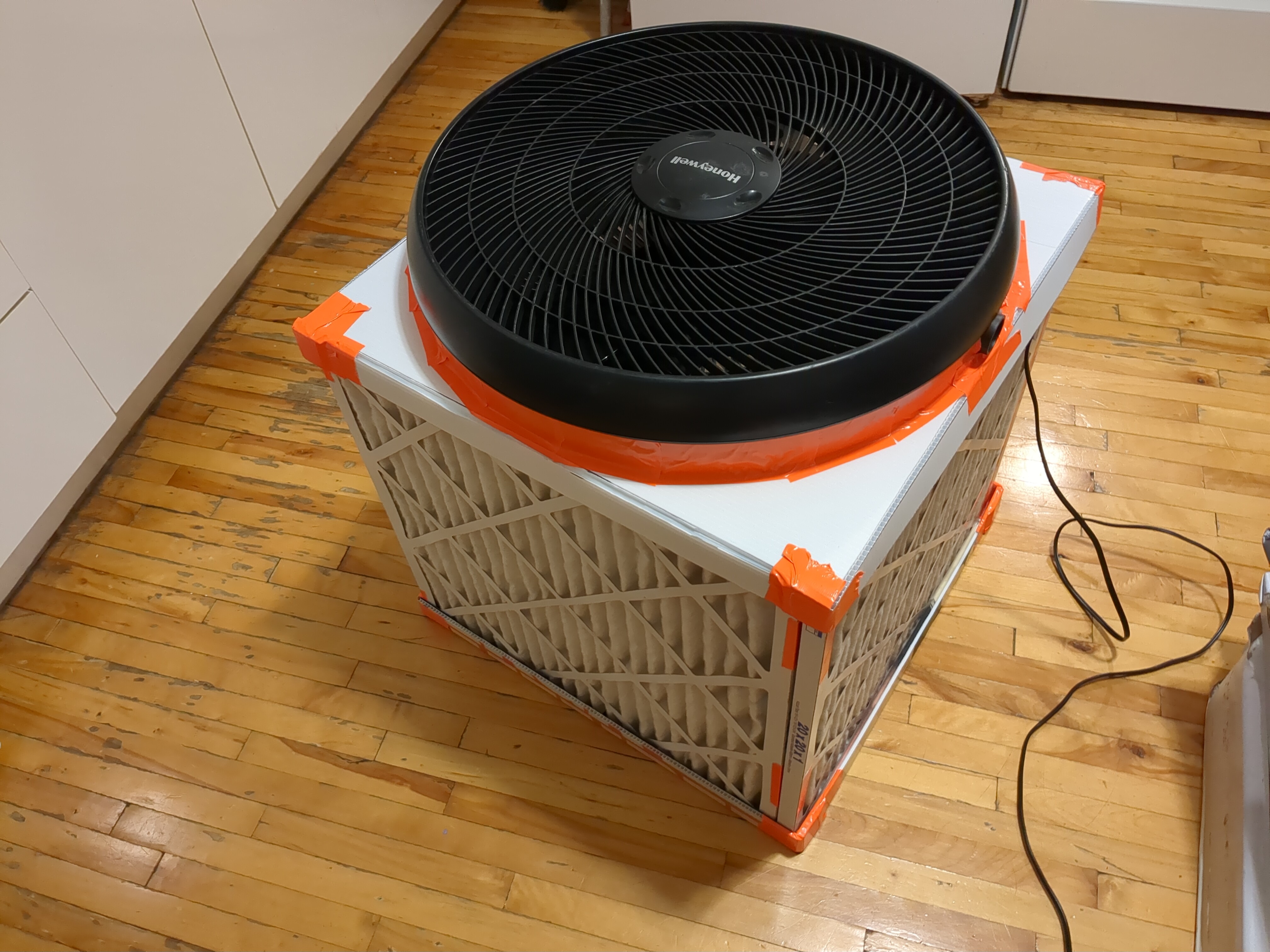
A little while ago, a friend of a friend told me about someone who had built collapsible CR boxes and sent me some photos. (I don't know who built the originals, or I'd credit/link them.) It was a very clever design, but I wanted to do things a little differently so I built a few for the local mask bloc's fledgling air purifier lending library, with help & input from friends. There's still some modifications & improvements I want to try, but I feel good enough about the basic design to share it. Suggestions would be welcome!
This page is sort of formatted as assembly instructions, because I don't have construction photos. I'll try to get actual construction photos at some point, but for now I'll try to explain some of the construction tricks along the way, and you can probably figure out the rest.
What's a CR Box?
CR Boxes are simple air purifiers made from box fans and furnace filters. Compared to most commercial purifiers they have a high Clean Air Delivery Rate, they're cheap, and you can often get the parts from a hardware store. Air purifiers can reduce pathogens, allergens, smoke, and other pollutants in the air.
Why make it collapsible?
CR Boxes are big and bulky - usually they're cubes about two feet on a side - and most of that volume is air. That's fine if you keep them in one place, but if you want to move them around (e.g. if you're lending them out for events) it's much easier if you can fold them up.
Materials
Furnace Filters - Ideally, these should be MERV 13 rated. 3M Filtrete 1900 is often considered the gold standard for airflow, but aound here we get good deals on bulk orders of generic MERV 13 filters from furnacefilters.ca. 20x20 inch filters make a tidy cube, though you can sometimes get other 20 inch wide filters. The bigger your filters, the more effective the purifier will be.
Fan - A generic 20x20 inch square box fan works fine. The photos on this page show a round Honeywell fan that's a little quieter and more powerful, but I think this model is discontinued.
Corrugated Plastic, aka Coroplast - CR Boxes are often built from cardboard, but coroplast is more durable and waterproof (not that you want to get a CR box wet - that's bad for the filters). Campaign signs are often made from coroplast, and can often be had for free after an election.
Duct Tape - we had some fun colors handy so we used them for this batch of CR Boxes, but generic grey works fine too.
The Sides
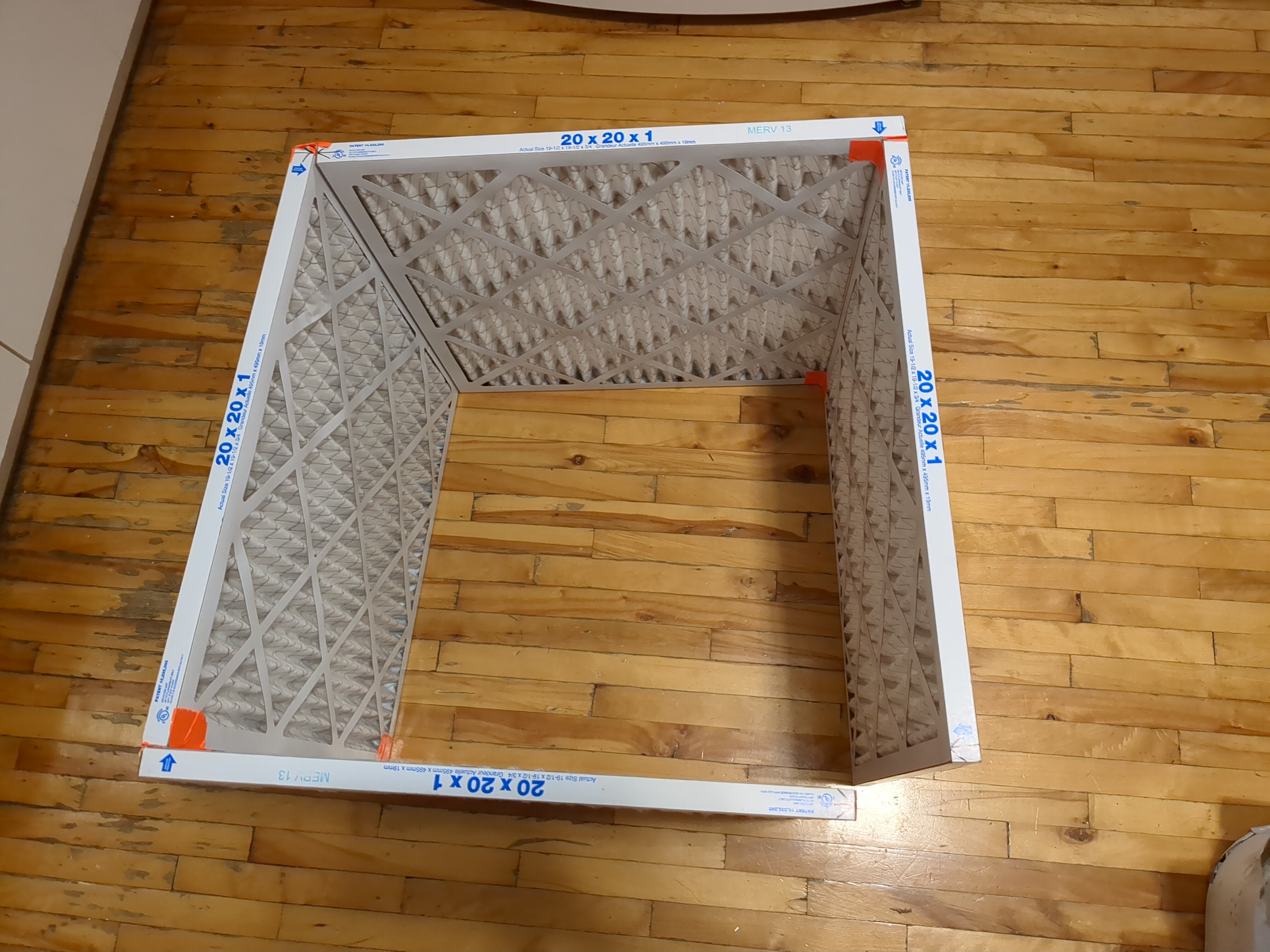
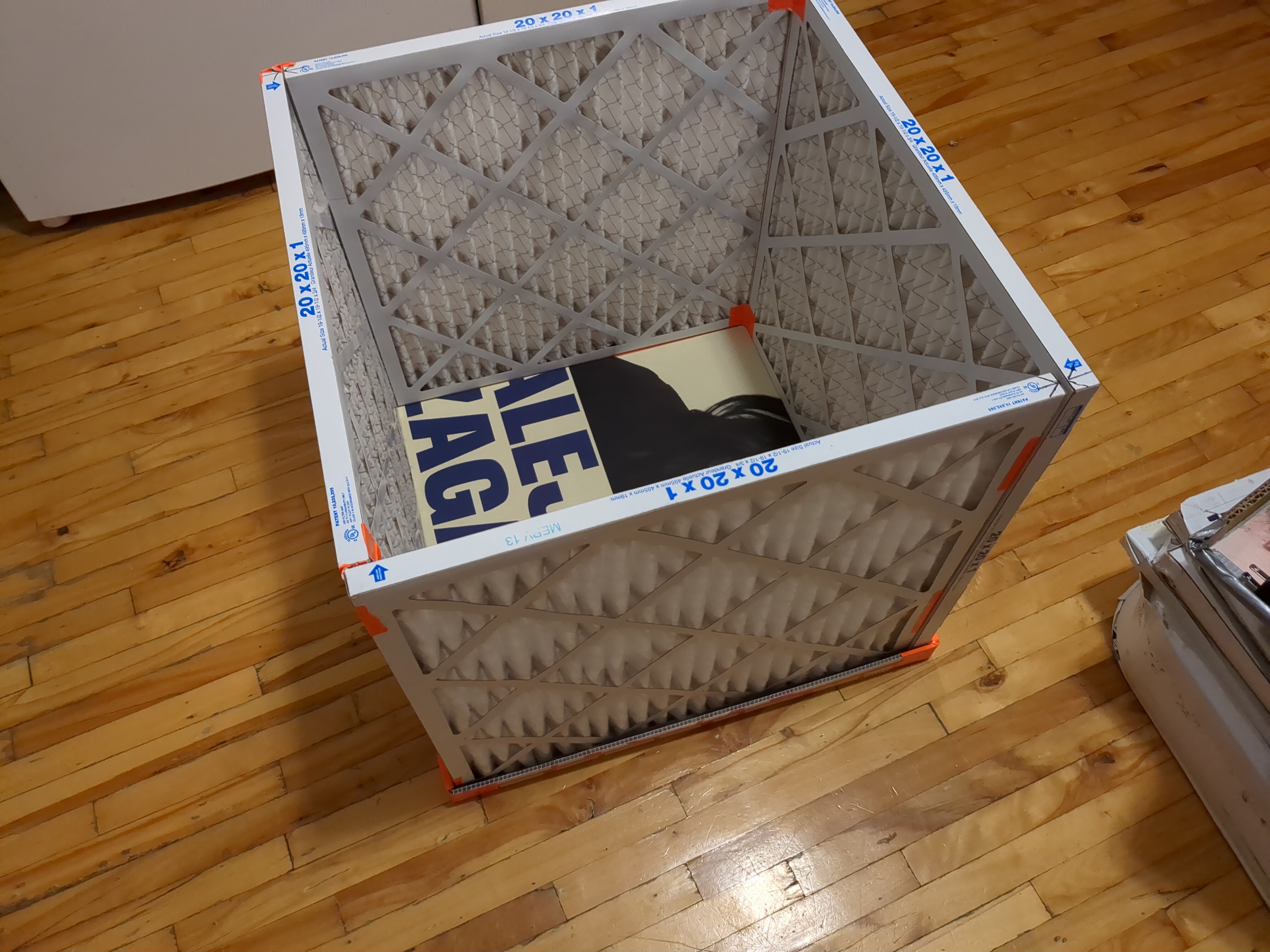
The sides of the box are made from furnace filters held together with duct tape hinges at three corners. There's two different types of hinge - one that allows 90 degrees of motion, and another that allows 270 degrees of motion.
When assembling the filters, there are two important things to remember:
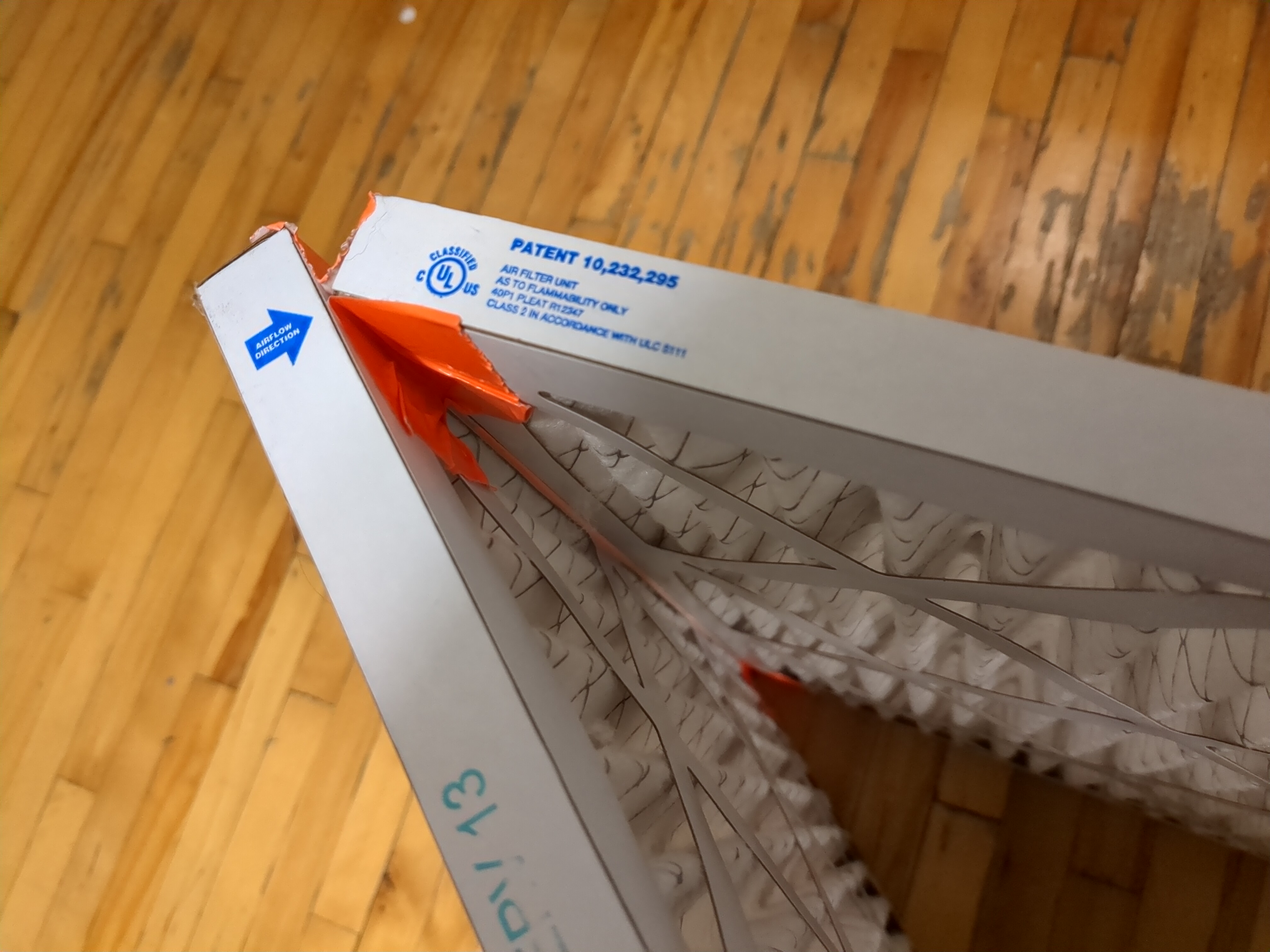
Furnace filters are directional! Make sure the arrows showing the direction of airflow end up pointing toward the inside of the CR Box.
Keep the pleats vertical! Furnace filters aren't really designed to be structural, but arranging them so the pleats are vertical instead of horizontal makes them a little more resistant to the weight of the fan pushing down on them.
The 270 Degree Hinge
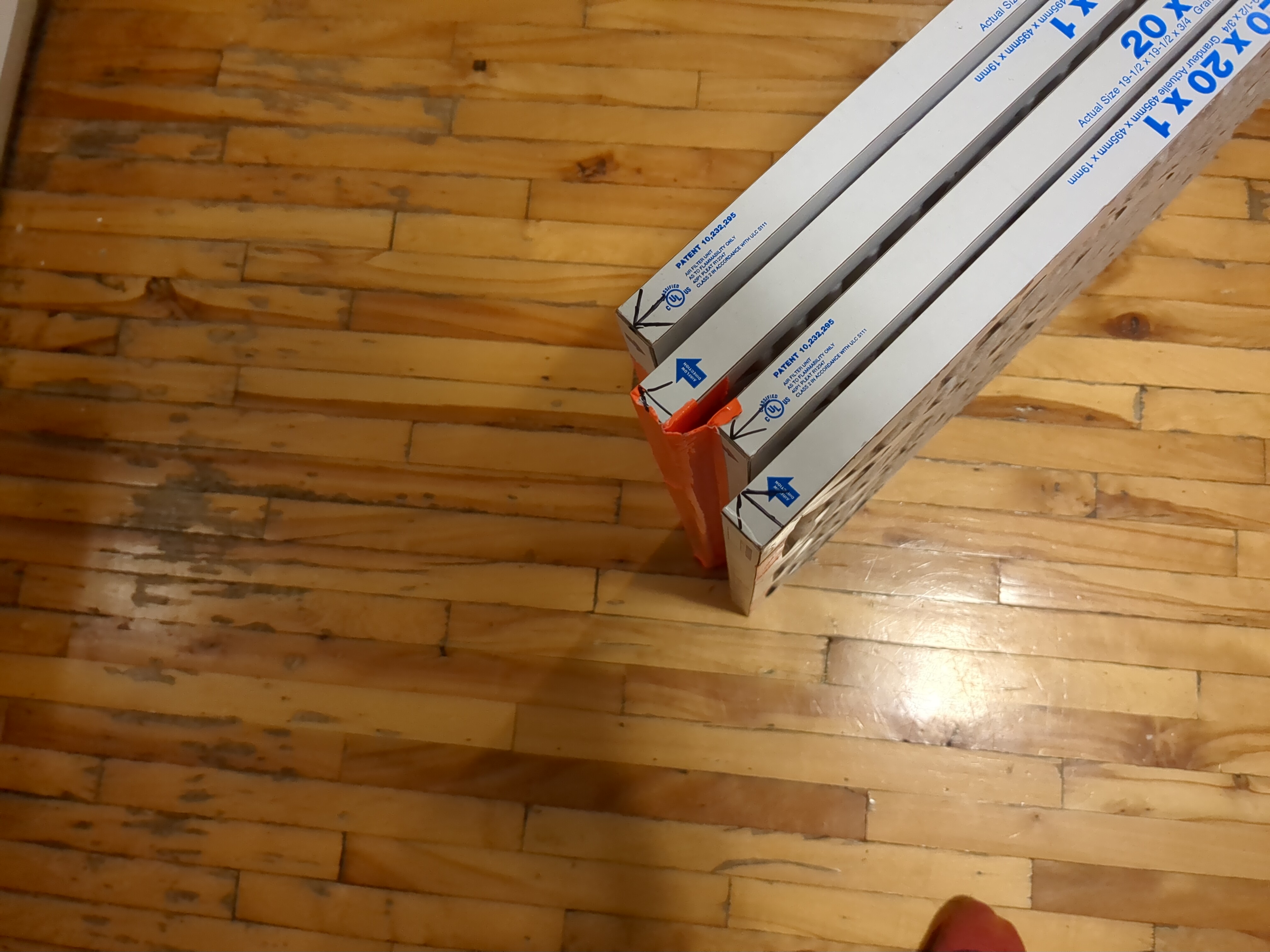
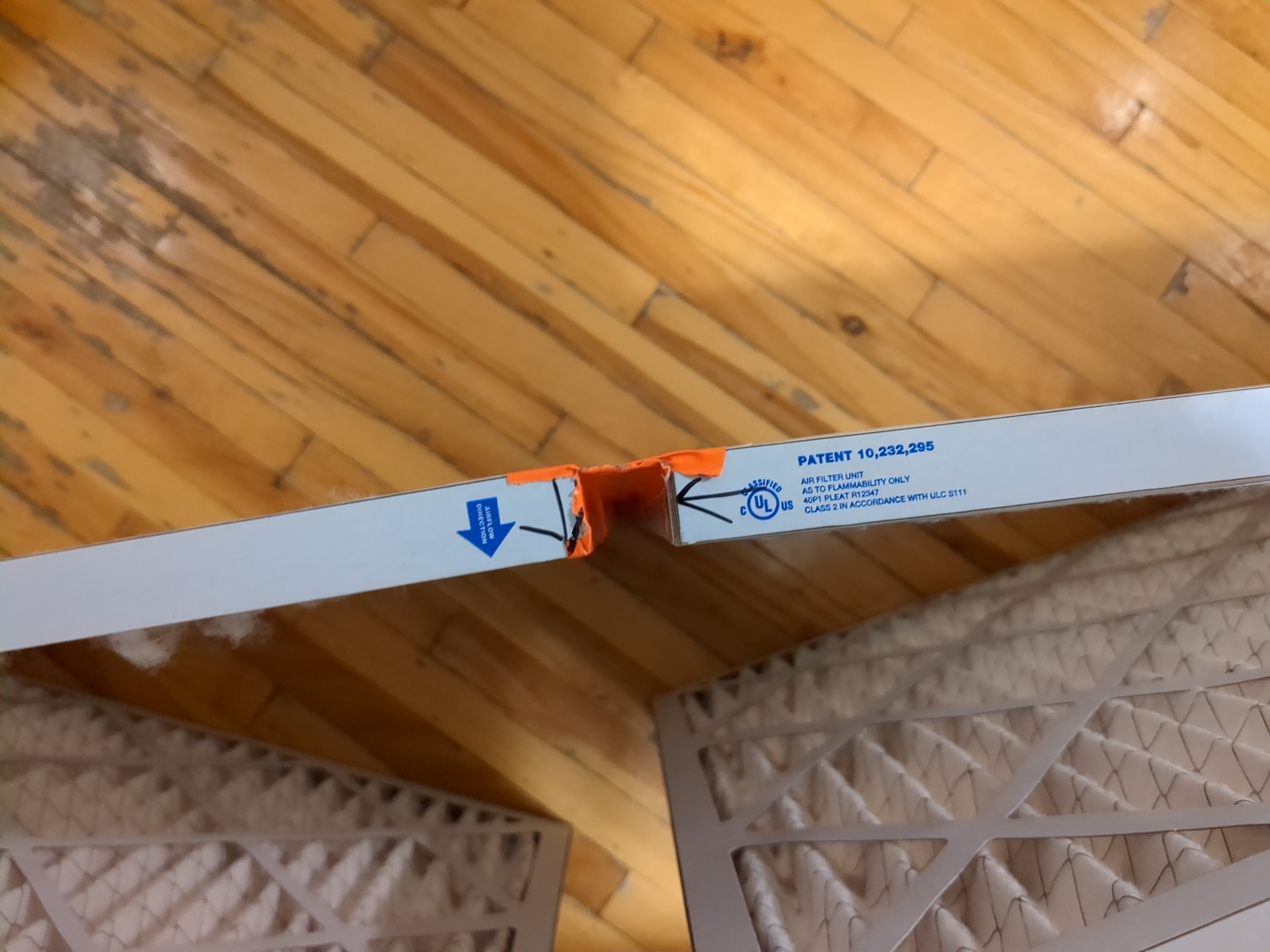
Probably the most complicated part of this design is the 270 degree hinge, and it's not that complicated - just duct taping the edges of two filters together with a gap equal to the thickness of a filter.
Folded: The 270 degree hinge is on the left, connecting the inner two filters in this air filter sandwich.Halfway unfolded: See that gap? It should be the same width as the filters are thick.
Construction tip: The easiest way I've found to make this hinge is to stack the two filters you're going to connect with another filter in between them (making the gap you need), apply duct tape down the length of the edges, then remove the filter in between, fold the two out flat on the floor/table, and apply duct tape to the other side of the hinge... which is probably clear as mud; I'll try to get proper photos soon.
Almost all the way! The end of one filter tucks into the "gap" made by the duct tape hinge, so it's pressed up against the end of the other filter.
I've taken to drawing little arrows that align when the hinge is folded correctly so it's easier to see at a glance whether you're putting it together right. It'll also be obviously wrong if the fully unfolded sides form a rectangle instead of a square, but the arrows make it easier.
The 90 Degree Hinges
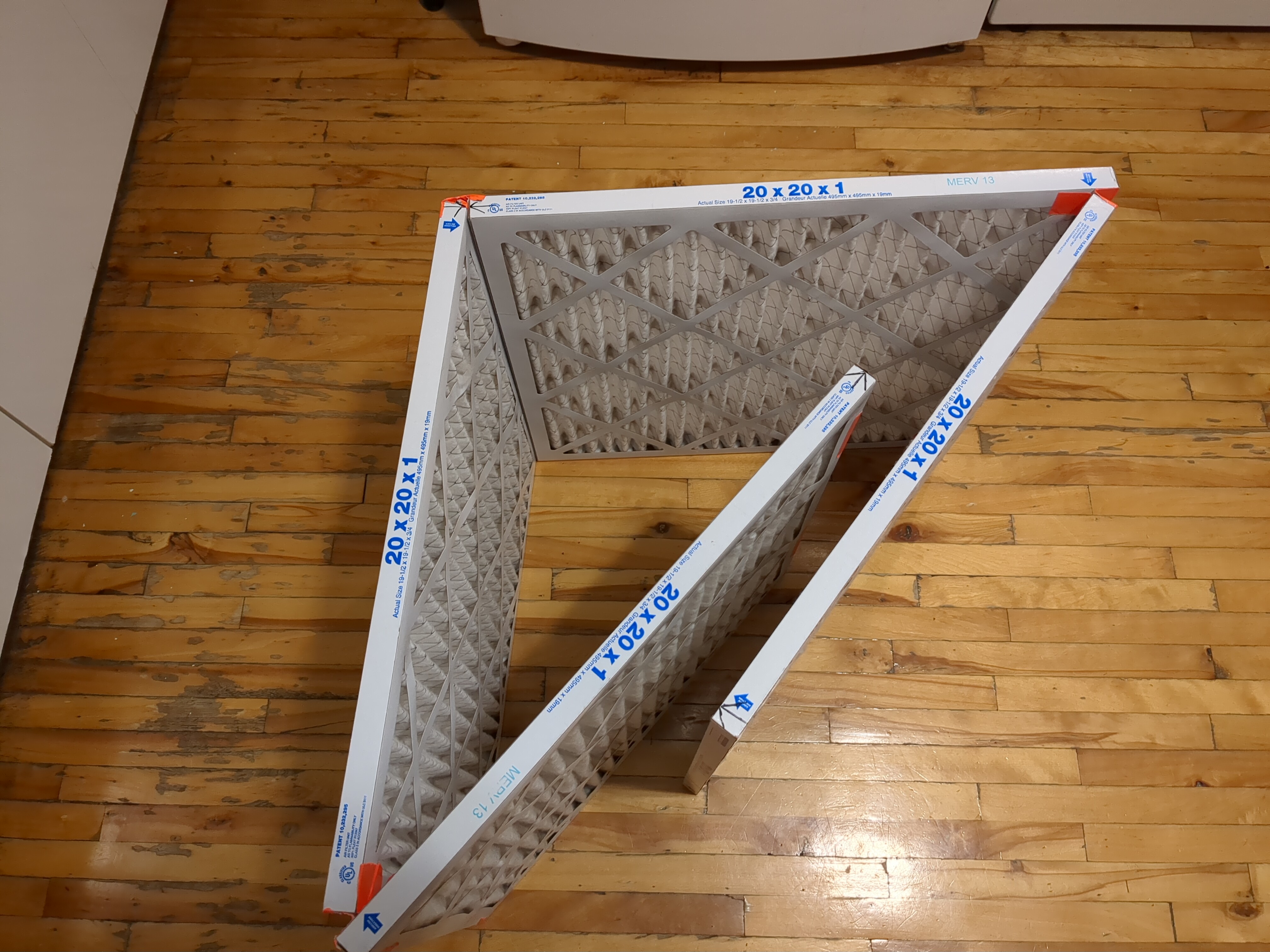
These are simpler to make, and connect the other two filters to the central pair.
90 degree hinges are simpler!
Construction tip: I like to make these hinges by holding the two filters at right angles to each other (ask a friend for help if you can) and applying a couple of pieces of tape to the inside corner where they meet. Then I can fold them flat against each other and carefully fit a strip of duct tape down the right angle on the other side of the hinge.
Nearly a box!
The Base
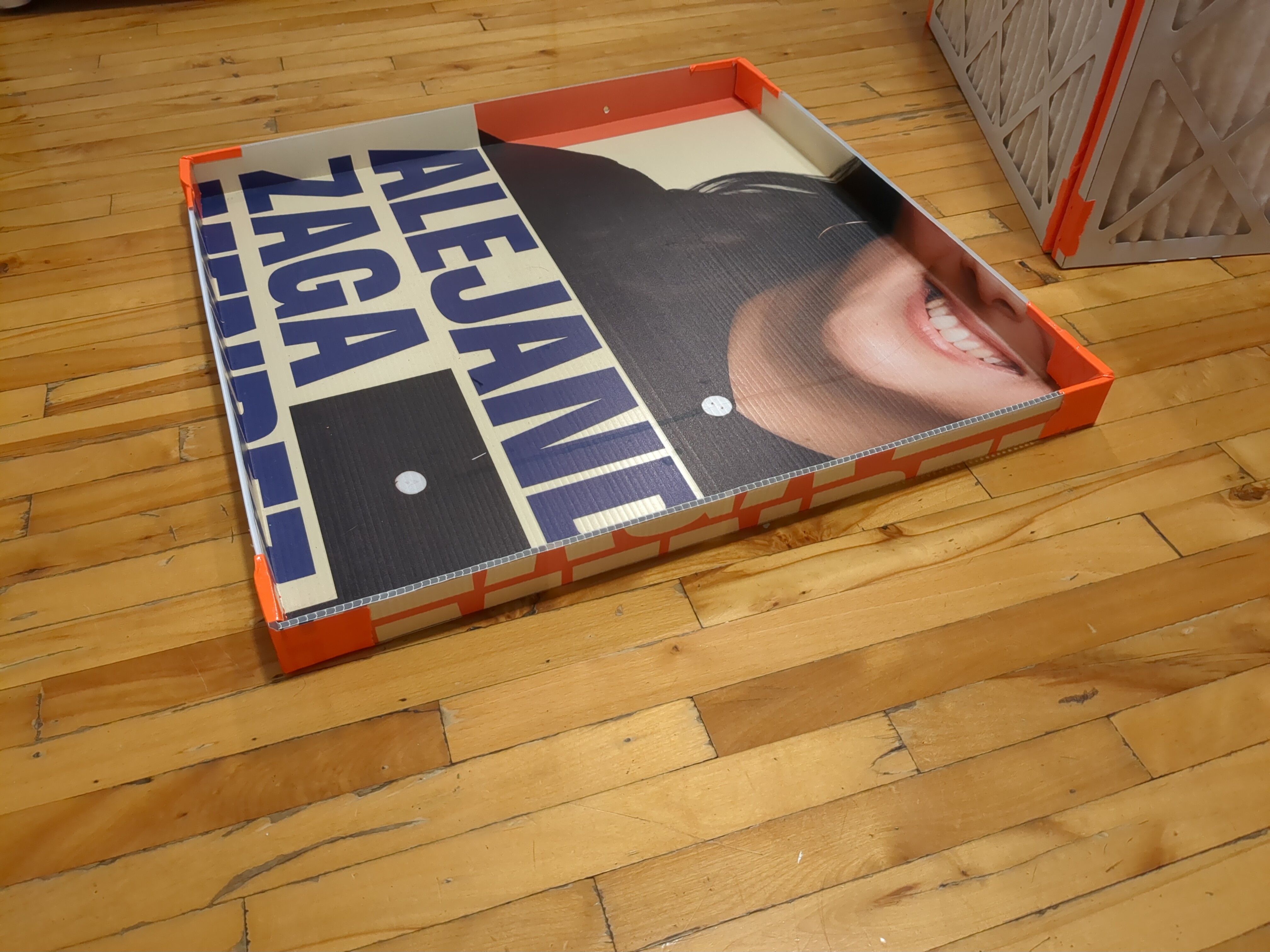
This used to be a campaign sign, and now it's the bottom of an air purifier! Make it big enough to fit the assembled square of filters.
The Top
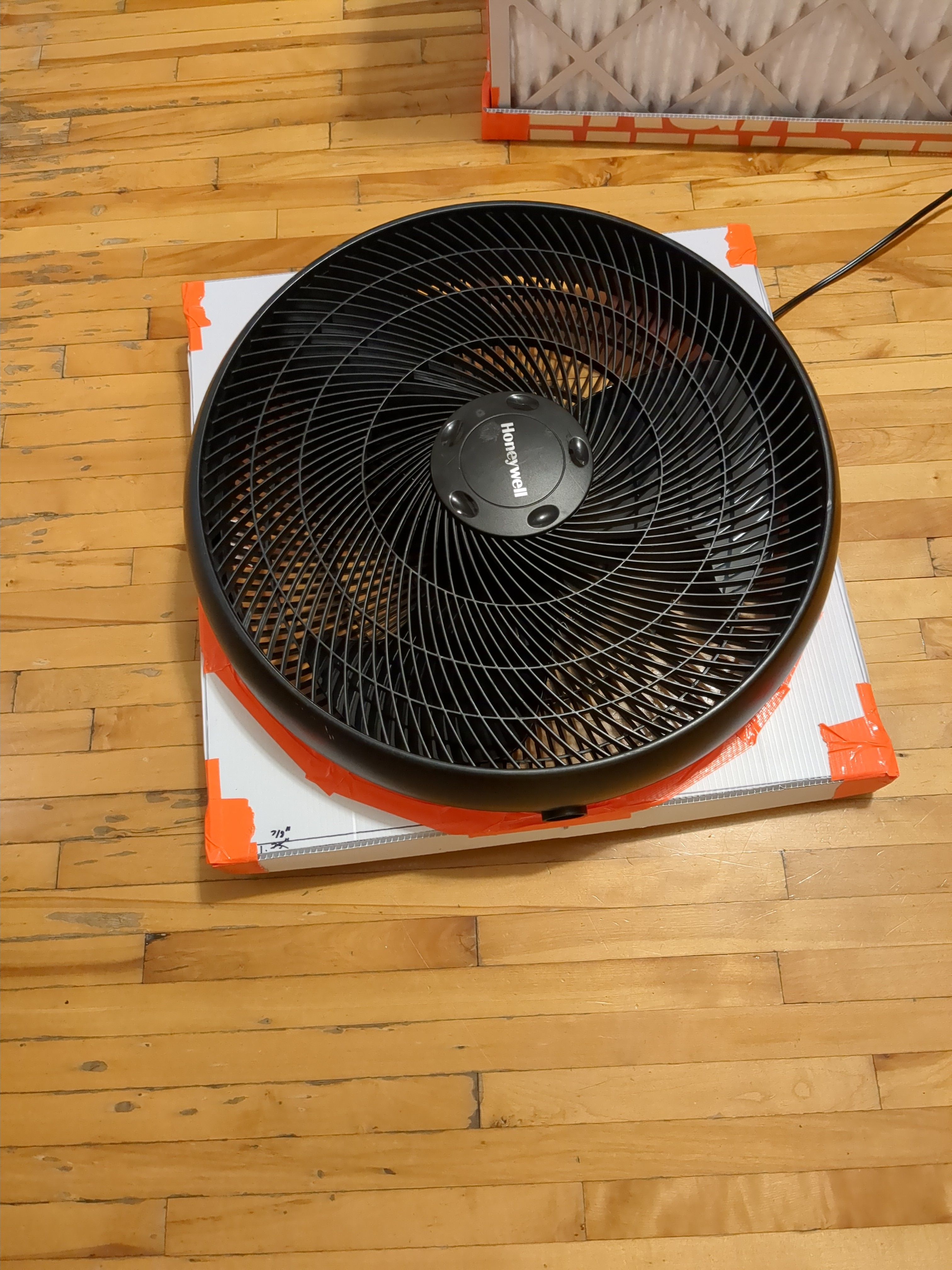
Top view (the top of the top)
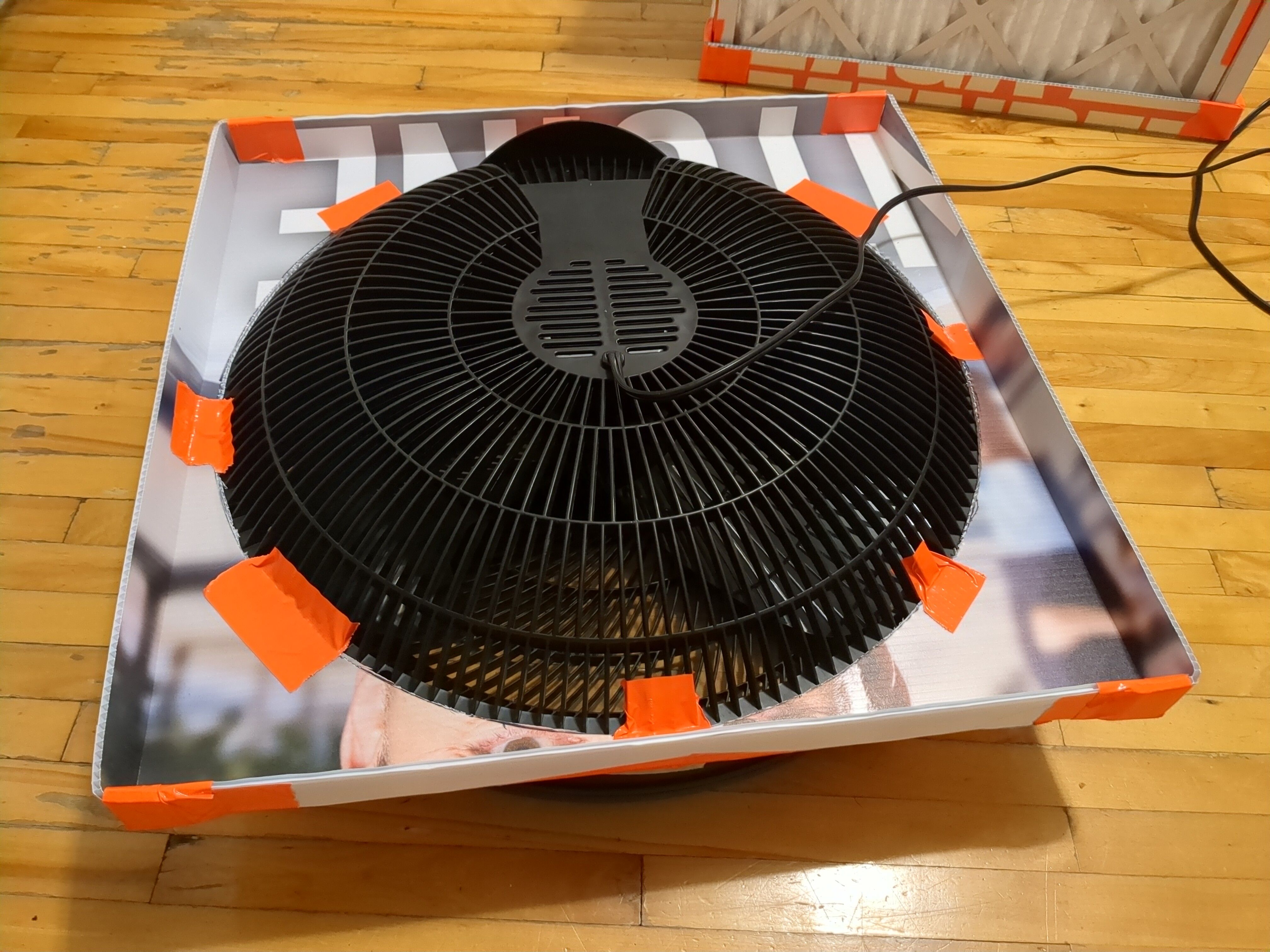
Construction tip: For the top, I make another square tray just like for the bottom, then cut a hole in in that's slightly smaller than the fan and tape the fan on. Non-collapsible CR boxes with square fans are often made by taping the fan directly to the top of the filters, but that doesn't give you edges extending down to hold the filters in place. You could substitute other fans if you want, e.g. an array of good computer fans would probably be quieter than most box fans.
Bottom view (the bottom of the top)
The way these round fans protrude through the inside of the coroplast top is a little inconvenient. With flat square fans, the filters can be stored tidily in between the bottom and top parts of the box when folded, but that doesn't work with this type of fan... yet. I think there's room for improvement here.
Putting It All Together
All that's left to do is put the top on!You probably saw this photo at the top of the page, but I'll include it again to save you some scrolling.
Taking It All Apart
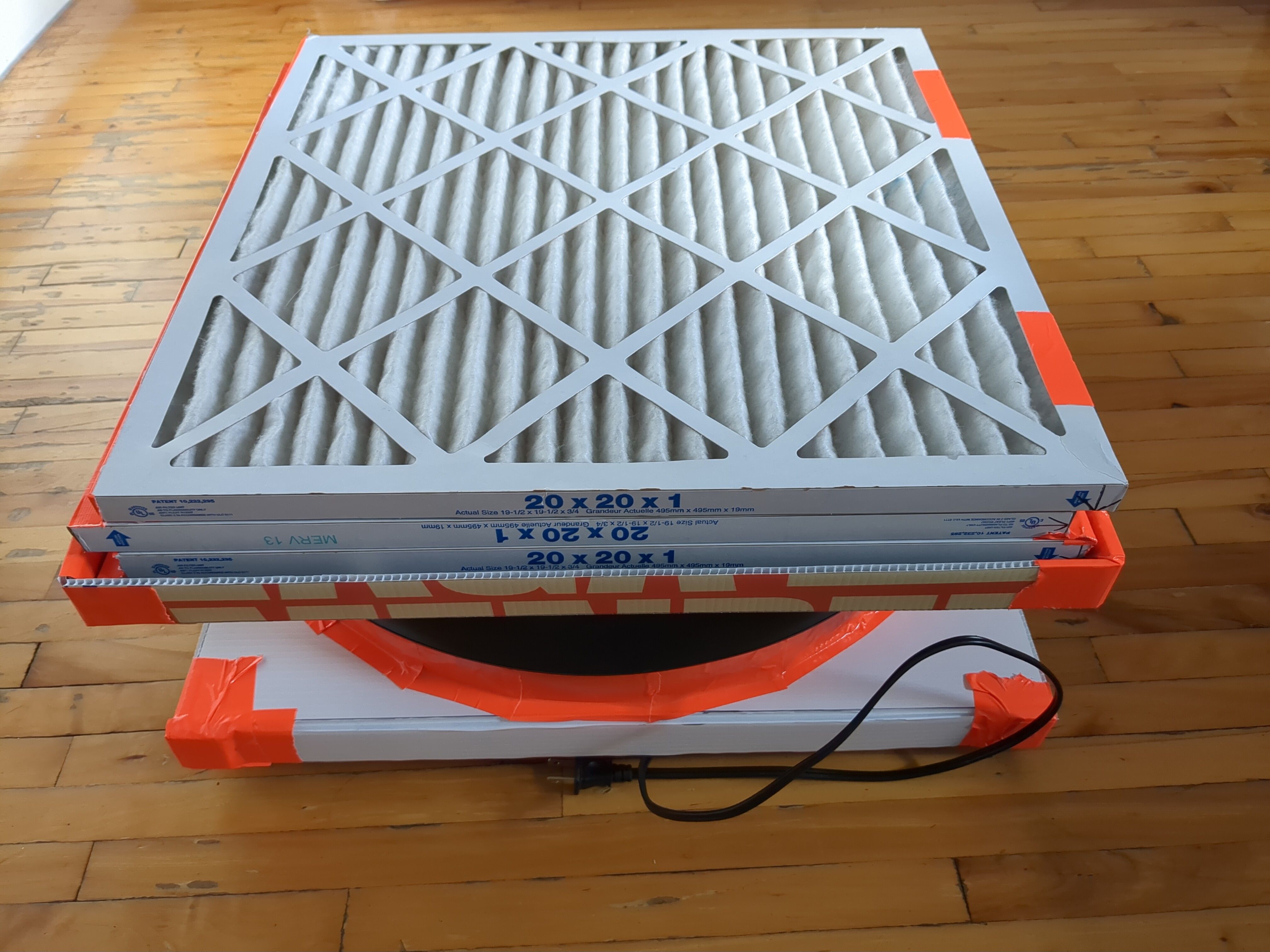
Packed, stacked, and ready to go!
And that's it! I'd like to make a nice carrying bag to put this in for transport, but if nothing else this is a whole lot easier to store and to lug around than a fully assembled CR Box. Also, it takes up way less space in a closet or on a bike trailer.